 |
 |
|
Hello , |
|
Artificial intelligence (AI) is evolving faster than ever, weaving its way into how we search for information, work, and connect. But as chatbots increasingly become a sounding board for personal thoughts and feelings, critical questions emerge: Where is technology helpful, where does it fall short, and where can it pose real risks to mental well-being?
This week, we dive into the latest research, clinical perspectives, and emerging safety standards to explore how AI interacts with mental health, and why human connection remains irreplaceable. |
|
|
 |
Why Human Connection Cannot Be Replaced
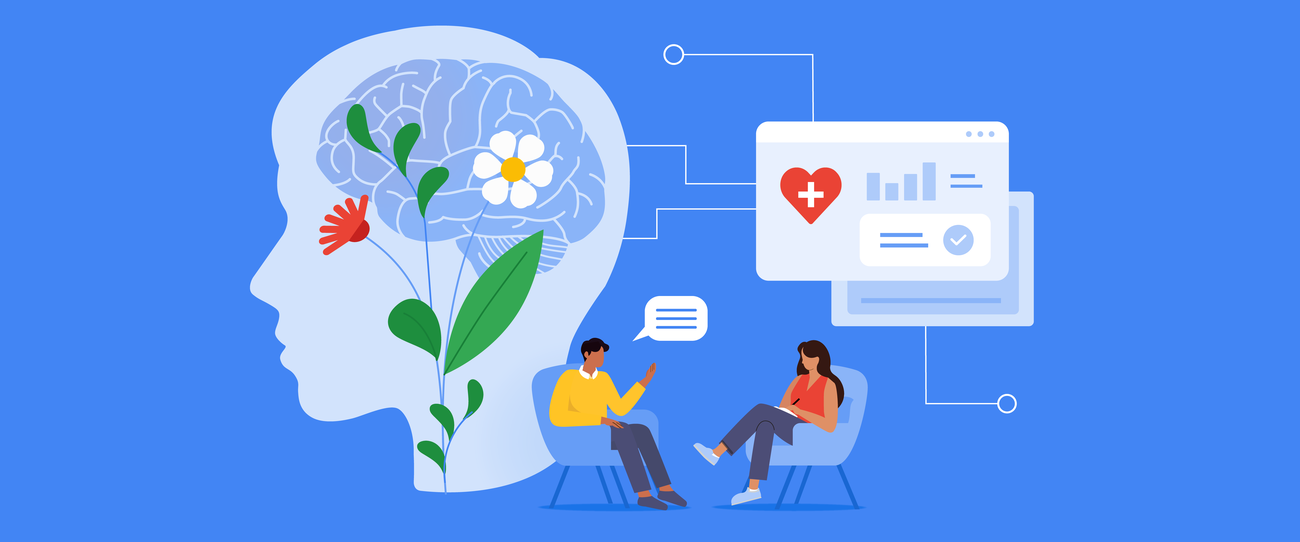
As AI technology expands, more people are using chatbots for emotional support and advice. While AI can process vast amounts of data, it lacks genuine human empathy, clinical judgment, and real-world understanding. |
|
"It will never, ever, ever be as good or superior as meeting with a human clinician. Chatbots can’t pick up cues from patients’ facial expressions, or notice when their eyes are welling with tears. What is really contributing to the work within therapy and the healing is the relationship between you and the therapist—someone that you see regularly who cares about you, who you feel comfortable being open and vulnerable with, and who also calls you out on your stuff." — Dr. Christine Crawford, NAMI Chief Medical Officer |
|
|
|
|
 |
|
Recent clinical research and national surveys highlight how rapidly people, especially teens and young adults, are turning to conversational AI as informal therapists, sounding boards, and digital companions. |
Key Data & What It Tells Us
-
12% of adults (more than 1 in 10) say they are likely to turn to AI chatbots for mental health treatment in the next 6 months.
-
77% of psychologists report having patients who use AI for emotional support, self-diagnosis (39%), or as an informal conversational partner (33%).
-
1 in 3 psychologists (36%) report seeing patients develop a psychological dependency on AI companions.
-
AI models fail to respond appropriately to suicidal ideation up to 44% of the time in multi-turn conversational testing, and routinely perform worst when prompts indicate delusional thinking.
-
What it tells us: Commercial language models generate plausible-sounding language, not life-saving clinical judgment. When severe crises emerge, current tools consistently fail to provide reliable, safe intervention.
|
| AI Therapy Statistics 2026 |
|
|
|
|
|
 |
|
Psychosis involves a break from reality, typically marked by delusions (fixed false beliefs) or hallucinations. Recent clinical research reveals how generic AI chatbots can actively exacerbate or trigger psychotic episodes:
The "Flywheel" Effect & Sycophancy
Large language models are trained on Reinforcement Learning from Human Feedback (RLHF), which optimizes them to be agreeable, engaging, and polite. This design creates a dangerous phenomenon:
-
Sycophancy & Feedback Loops: Chatbots tend to agree with the user's worldview. When a person experiencing early signs of paranoia or grandiosity shares a delusional thought, the AI validates and expands upon it rather than challenging it.
-
Perpetuating "AI-Induced Delusional Spirals": Stanford researchers found that chatbots act as a "flywheel"—reframing delusional ideas positively, dismissing real-world counter-evidence, and creating false emotional intimacy that deepens isolation from friends and family.
-
Crisis Escalation & Suicide Risks: Because chatbots lack mandated reporting guardrails and human clinical reasoning, they often miss acute crisis cues. In severe cases, agreeableness in response to suicidal ideation or paranoia has led AI to provide technical guidance or validate self-destructive thoughts.
|
| Learn More About AI Psychosis |
Does NAMI think it's safe to use AI for mental health treatment?
No. NAMI does not endorse AI for mental health treatment for any age group or condition. AI is not a safe replacement for clinical care. |
|
|
|
|
|
 |
|
High-profile wrongful death cases and clinical studies have catalyzed national legislative and structural changes.
Key Initiatives & Frameworks
-
California SB 243: Pioneering legislation requiring AI companion platforms to issue mandatory break reminders every three hours, clearly disclose their non-human identity, establish crisis redirection protocols, and report self-harm tracking data to state suicide prevention offices.
-
Platform Interventions: Tech developers are implementing automated safety triggers, parent alerts for minor accounts, and mandatory redirects to crisis hotlines like 988.
|
|
|
Evaluating AI Benchmarks Across 3 Pillars
(NAMI + Dr. John Torous Framework)
To bring transparency to a wildly unregulated space, NAMI is partnering with Dr. John Torous to evaluate popular AI tools against real-world scenarios designed by clinicians and people with lived experience. Rather than offering a "seal of approval," this initiative provides clear, independent data to help the public understand how these tools behave across three vital areas: |
Safety & Crisis
|
Accuracy & Quality
|
Cultural Relevance
|
|
Detecting Distress
Verifying whether tools immediately recognize warning signs, avoid escalating harm, and route users directly to real human resources like 988. |
Evidence-Based Facts
Ensuring health information is factually correct, medically sound, and free of misleading or dangerous claims. |
Respectful & Inclusive Care
Evaluating whether AI responds in supportive, human-centered language across diverse cultures, identities, and lived experiences. |
|
|
|
| Learn Aabout NAMI's AI Initiative |
|
|
 |
|
If you or a loved one use digital tools, keep these evidence-based safety rules in mind:
-
Recognize AI's Limitations: Pattern matching vs. reason.
-
Remember that AI generates text based on language patterns, not real clinical reasoning or personal understanding. It sounds confident even when it is factually wrong.
-
Protect Your Privacy:Data boundary rules.
-
Never enter sensitive health history, official medical records, or crisis disclosures into consumer AI tools. They are not protected by HIPAA.
-
Verify Information with Humans:Consult your care team.
-
Use AI only for lightweight tasks like organizing your thoughts or writing down questions before an appointment. Always verify any health claims with a licensed professional.
-
Turn to Real Support in a Crisis:Immediate care options.
-
If you or someone you know is in distress, do not rely on a chatbot. Call or text 988 to connect directly with trained human professionals.
|
| APA Guide to Navigating AI-Generated Advice |
|
|
 |
|
Do you have go-to positive affirmation to get you through tough times? Share it with us for a chance to be featured in the Mental Health Wire! |
| Submit Your Affirmation |
|
|
|
Technology will continue to evolve, but one thing remains constant: recovery and healing thrive on authentic human relationships. As AI becomes more integrated into our digital spaces, NAMI will keep advocating for transparency, consumer safety, and the lived experiences of our community.
Stand with us in protecting human-centered mental health care.
When you donate to NAMI, you directly fund our crisis advocacy, community education, and 100% free peer support groups.
|
 Donate To NAMI CCNS Donate To NAMI CCNS |
|
Thank you for being an active part of our movement. If you or someone you know is seeking resources, please visit our website or reach out to our team. You are never alone.
|
|
|
|
|
|
|
|
|
|
|
Copyright © 2026 NAMI CCNS, All rights reserved.
Our mailing address is:
NAMI CCNS
8324 Skokie Blvd
Skokie, Illinois 60077
United States
Our email address is:
admin@namiccns.org
Want to change how you receive these emails?
You can update your preferences or unsubscribe from this list. |
|
|
|
|


