 |
|
Hello , |
 |
|
Mental Health Awareness Month may be over, but our collective dedication to mental wellness never stops. This past May, our community came together in incredible ways to learn, share, and dismantle stigma.
To keep that powerful momentum alive, we have compiled our complete May Awareness Series into downloadable, easy-to-read guides. |
|
|
 |
|
If you missed a week or want to share these vital resources with a loved one in need, you can download them directly below: |
|
|
|
Week 1: Understanding Mental Health: The Foundation of Wellbeing
Week 2: Youth Mental Health: Supporting Children, Adolescents & Young Adults
Week 3: Words Matter: Talking About Mental Health
Week 4: Dismantling Stigma: From Shame to Strength
Week 5: More Good Days, Together |
|
|
If you found our May Mental Health Wire newsletters to be especially helpful, informative, or impactful to your life, please consider making a donation to NAMI CCNS. Your generosity keeps our support groups, classes, and community resources 100% free to the public. |
| Donate to NAMI CCNS |
|
|
|
Week 1: Understanding Mental Health: The Foundation of Wellbeing
Week 2: Youth Mental Health: Supporting Children, Adolescents & Young Adults
Week 3: Words Matter: Talking About Mental Health
Week 4: Dismantling Stigma: From Shame to Strength
Week 5: More Good Days, Together |
| May is Mental Health Month Newsletter Series |
|
|
|
If you found our May Mental Health Wire newsletters to be especially helpful, informative, or impactful to your life, please consider making a donation to NAMI CCNS. Your generosity keeps our support groups, classes, and community resources 100% free to the public. |
| Donate to NAMI CCNS |
|
|
 |
Moving into June: Words Matter in the LGBTQ+ Community
As vibrant Pride flags fly across our North Suburban communities, we are transitioning our focus to the intersection of identity and mental health wellness.
Just like our May series taught us that "Words Matter" when talking about mental illness, the language we use surrounding sexuality and gender identity is a fundamental building block of mental wellness and allyship. |
|
|
 |
|
To understand how to be a supportive ally, it helps to realize that identity is not a single concept. It is a beautiful combination of distinct traits. A wonderful tool for visualizing this is The Genderbread Person, which separates identity into four completely independent categories. |
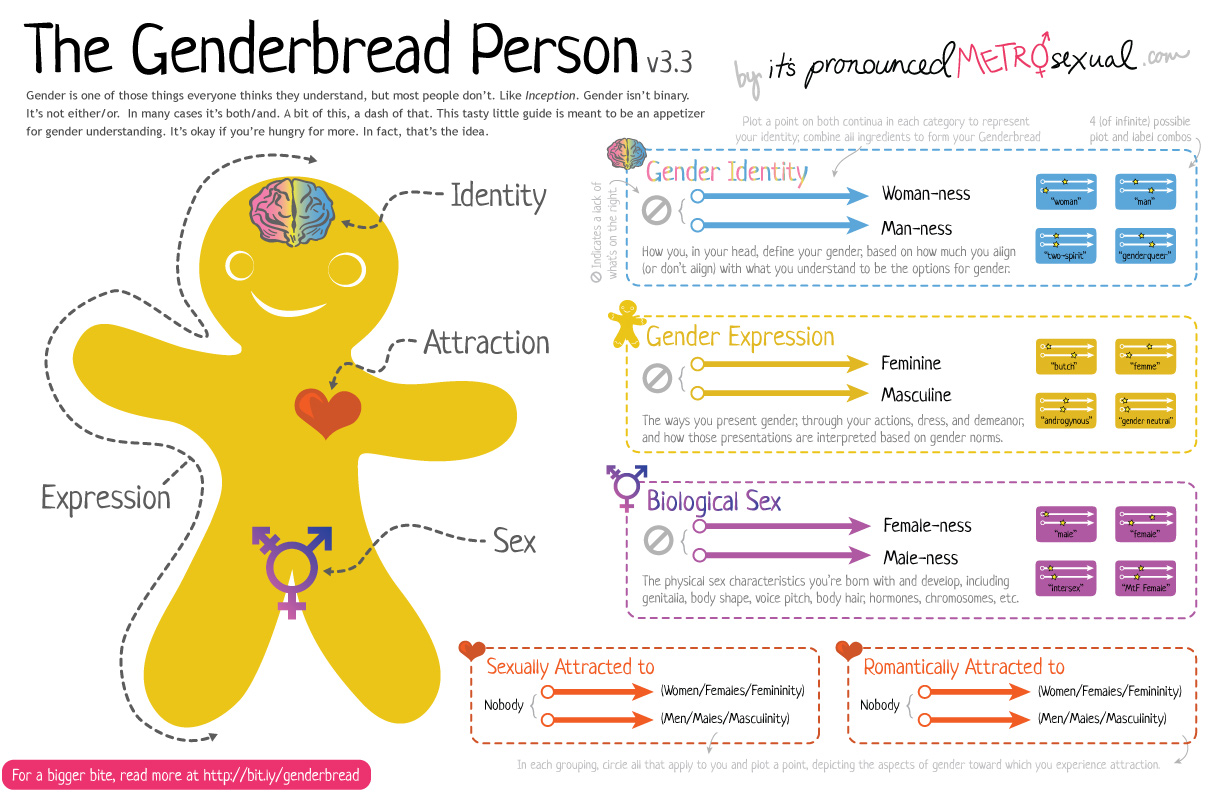 |
Let’s look at the diagram above to break down what each of these components means in everyday life:
1. Gender Identity (Who You Know Yourself to Be)
This is a person's deeply felt, internal sense of their own gender. It is an internal experience of "man-ness," "woman-ness," both, or neither. For generations, Western society viewed gender through a strict binary lens (man/woman). In reality, gender is a complex social construct. Expanding beyond this binary allows individuals to express their authentic selves without rigid societal constraints.
2. Gender Expression (How You Present Yourself)
This is how a person communicates their gender identity to the world. It is purely external and can be expressed through clothing, hairstyles, behavior, makeup, body language, voice, and the names and pronouns they use.
-
Expression vs. Identity: Expression (masculine, feminine, androgynous) does not automatically equal identity. A person can dress in a masculine way without identifying as a man.
-
Pronouns Matter: Pronouns (like he/him, she/her, they/them, ze/zir) are a key part of gender expression. Honoring them is a baseline act of respect and validation.
3. Biological Sex (The Physical Spectrum)
While society often treats biological sex as a strict male/female binary, human biology is actually a spectrum. Biological sex is made up of physical features, sex chromosomes, genes, and hormones.
4. Sexual Orientation (Who You Love)
This is an inherent, immutable emotional, romantic, or sexual attraction to other people. It includes how a person self-identifies (such as heterosexuality, homosexuality, bisexuality, pansexuality, or asexuality).
|
|
|
Deepen Your Vocabulary
If you are navigating these terms for the first time or want to ensure your language is up to date, explore the complete Human Rights Campaign Glossary of Terms for clear, comprehensive definitions. |
| Human Rights Campaign Glossary of Terms |
|
|
|
 |
|
If you or an LGBTQ+ loved one are struggling in silence, experiencing acute distress, or having thoughts of self-harm, please reach out immediately.
Specialized, identity-affirming support is always available:
-
The 988 Suicide & Crisis Lifeline: Call or text 988. It is free, confidential, and available 24/7.
-
The Trevor Project: Dedicated crisis intervention for LGBTQ+ young people under 25.
-
Trans Lifeline: A confidential peer-support hotline run entirely by trans individuals for trans and questioning peers.
|
|
|
|
|
|
|
|
|
|
 |
|
Do you have go-to positive affirmation to get you through tough times? Share it with us for a chance to be featured in the Mental Health Wire! |
| Submit Your Affirmation |
|
|
|
Pride is fundamentally tied to the mental health movement. It grew out of a vital demand for inclusion, bodily autonomy, and the basic human right to exist openly. By dedicating time to educate ourselves, adjusting our everyday habits, and fiercely protecting safe spaces, we can build a community where every individual feels profound pride in their identity and their mental health journey.
Next Thursday, the Mental Health Wire will dive deep into the specific clinical data regarding LGBTQ+ mental health, the environmental risk factors this community faces, and a practical steps on how to be a good ally.
Thank you for reading, learning, and standing with us.
|
|
In solidarity and health,
The NAMI CCNS Team |
|
|
|
|
|
Copyright © 2026 NAMI CCNS, All rights reserved.
Our mailing address is:
NAMI CCNS
8324 Skokie Blvd
Skokie, Illinois 60077
United States
Our email address is:
admin@namiccns.org
Want to change how you receive these emails?
You can update your preferences or unsubscribe from this list. |
|
|
|
|


