|
 |
|
Hello , |
|
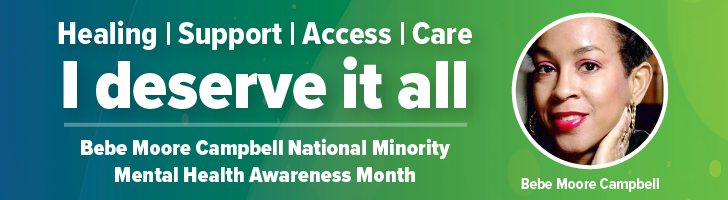
This July, we honor the legacy of Bebe Moore Campbell, a trailblazer in the fight for mental health equity. In 2008, the U.S. House of Representatives designated July as Bebe Moore Campbell National Minority Mental Health Awareness Month, inspired by her mission to end stigma and expand access in underserved communities.
|
|
|
 |
|
Bebe Moore Campbell was a literary trailblazer, who used her words in books to address the profound impact of racism, mental health and the enduring strength of culture, community and connections. Sheco-founded NAMI Urban Los Angeles and became a national change agent whose groundbreaking work revolutionized the way we approach mental health in underserved communities. |
|
|
|
Campbell understood that mental health isn’t just about individual healing; it’s about community transformation. She believed in creating space where cultural identity and emotional well-being could coexist, and where lived experience could guide others toward healing. As we honor her legacy, we recommit to her call to build a more inclusive mental health system. |
|
|
| Learn More About Bebe Moore Campbell |
|
|
 |
|
To build on Bebe Moore Campbell’s mission, NAMI created the Community Health Equity Alliance (CHEA). Mental illness can affect anyone regardless of race, identity, or socioeconomic status, but systemic disparities create massive gaps in care. The data highlights why targeted, culturally conscious action is necessary:
-
Black adults are 20% more likely to report serious psychological distress than white adults.
-
More than half (~57%) of U.S. adults with any mental illness do not receive treatment—and this unmet need is significantly greater for communities of color.
-
Only 1 in 3 Black adults who need mental health treatment actually receive it.
Due to racism and systemic barriers, Black/African ancestry and other minoritized communities face greater hurdles accessing culturally responsive support and are more likely to receive poorer quality care. Through CHEA, NAMI is fighting to change this by prioritizing four main pillars: Educate, Expand, Convene, and Connect. |
| Community Health Equity Alliance Resources |
|
|
|
|
|
 |
|
For Black, Indigenous, and People of Color (BIPOC) communities, mental health conversations often carry layers of historical mistrust, cultural stigma, and unique systemic stressors. Creating safe spaces requires moving past a "one-size-fits-all" approach to wellness:
-
Acknowledge Intersectional Stressors: Recognize that mental health does not exist in a vacuum. For BIPOC individuals, daily encounters with systemic racism, microaggressions, and generational trauma are directly tied to emotional well-being. Validate these realities as legitimate mental health factors.
-
Honor Generational Wisdom and Collective Healing: Western wellness models often prioritize individualism (e.g., "self-care" alone). Many BIPOC cultures find healing through collective spaces, storytelling, faith networks, or ancestral practices. Embrace community care as a valid, powerful form of medicine.
-
De-Centering the "Expert" Dynamic: Stigma is broken when conversations happen naturally among peers. Instead of lecturing, create spaces where lived experience is treated as expertise, and where individuals can speak openly without fear of being pathologized or misunderstood.
|
|
|
|
|
 |
|
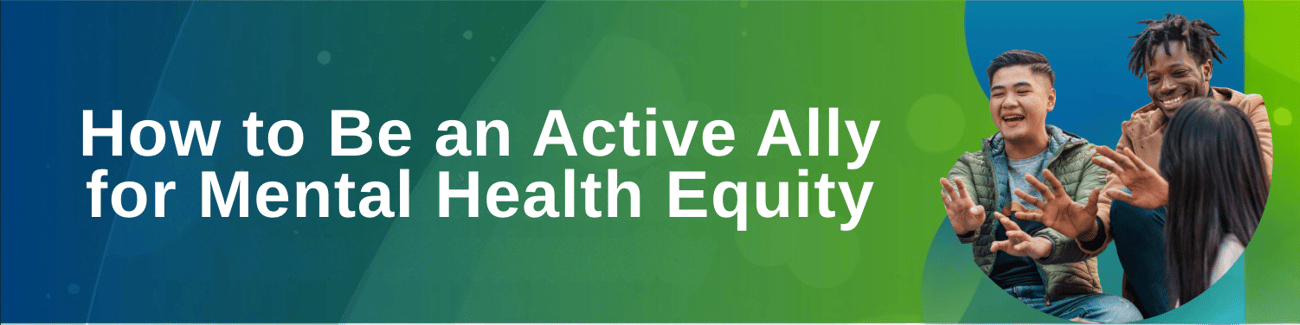
True allyship means moving from passive awareness to active advocacy. If you want to support BIPOC mental health wellness this month, focus on these practical, culturally conscious tools:
-
Listen Without Interruption or Defense: When a BIPOC peer shares an experience involving racial trauma or systemic frustration, resist the urge to minimize, tone-police, or offer quick fixes. Phrases like "Thank you for trusting me with that, I am listening" provide safety without center-staging your own perspective.
-
Do the Internal Homework: Do not rely on your BIPOC friends or colleagues to educate you on the racial wealth gap in healthcare or the cultural nuances of therapy stigma. Take advantage of resources, books, and webinars to educate yourself independently.
-
Pass the Microphone and Vouch for Culturally Competent Care: If you are in a position to recommend workplace wellness benefits, school resources, or community programming, actively advocate for BIPOC-led initiatives and providers who practice cultural humility. Representation in care matters.
|
Want to host a formal NAMI Community Conversation?
We can provide your neighborhood, workplace, or faith group with step-by-step toolkits and discussion guides to facilitate safe, equitable, and impactful conversations. |
|
|
|
| Bring the Conversation to Your Community |
|
|
 |
|
Starting a dialogue about mental health doesn't require a formal setting or an expert certificate, it just requires a willingness to listen. Here is how you can naturally bring these vital conversations into your daily spaces this month:
-
Start with Vulnerable Check-Ins: Shift from the standard "How are you?" to more intentional questions in your social circles. Try asking, "How is your heart today?" or "What has been draining your energy lately?" Leading with your own honest answer creates a green light for others to do the same.
-
Establish Simple Safe Agreements: If you are opening up a discussion in a book club, faith group, or workplace, set a quick ground rule: What is shared here stays here, and we are here to support, not to fix. Removing the pressure to "solve" each other's problems makes people feel instantly safer to share.
-
Listen to Validate, Not to Reply: When someone opens up, resist the urge to immediately share a similar story or offer advice. Use affirming language like, "Thank you for trusting me with that," or "That sounds incredibly heavy, I'm glad you told me."
|
|
|
 |
|
Do you have go-to positive affirmation to get you through tough times? Share it with us for a chance to be featured in the Mental Health Wire! |
| Submit Your Affirmation |
|
|
 |
Donate to NAMI CCNS Today
We cannot break the silence around men’s mental health alone. Your generosity ensures that a brother, father, son, or friend always has a safe, stigma-free place to turn when they need it most.
|
| Donate Now |
|
Thank you for being an essential part of our community and for standing with us to fight stigma. True change starts with one conversation, and by staying informed, compassionate, and vocal, you are actively helping to save lives.
Whether you’re being vulnerable or making room for someone else to share, you are helping shape a reality where mental health support is accessible, affirming, and rooted in community. This month and every month, let’s end stigma, build connection, and reclaim wellness together.
|
|
|
|
|
|
|
|
|
|
|
Copyright © 2026 NAMI CCNS, All rights reserved.
Our mailing address is:
NAMI CCNS
8324 Skokie Blvd
Skokie, Illinois 60077
United States
Our email address is:
admin@namiccns.org
Want to change how you receive these emails?
You can update your preferences or unsubscribe from this list. |
|
|
|
|