 |
 |
|
Hello , |
|
Americans are talking about mental health today more than at any point in history. Public health campaigns encourage us to check in on our feelings, workplaces offer wellness days, and social media is filled with mental health content. Yet, reported levels of psychological distress continue to rise. This paradox raises an urgent question: Is our constant fixation on mental health actually making us more vulnerable?
When everyday emotions like burnout, sadness, or stress are routinely described using clinical language, we risk pathologizing the ordinary ups and downs of being human. At the same time, we face the challenge of making sure people can still recognize when everyday struggles are evolving into something that requires clinical support. In this edition of The Mental Health Wire, we unpack this exact dilemma.
|
|
|
 |
|
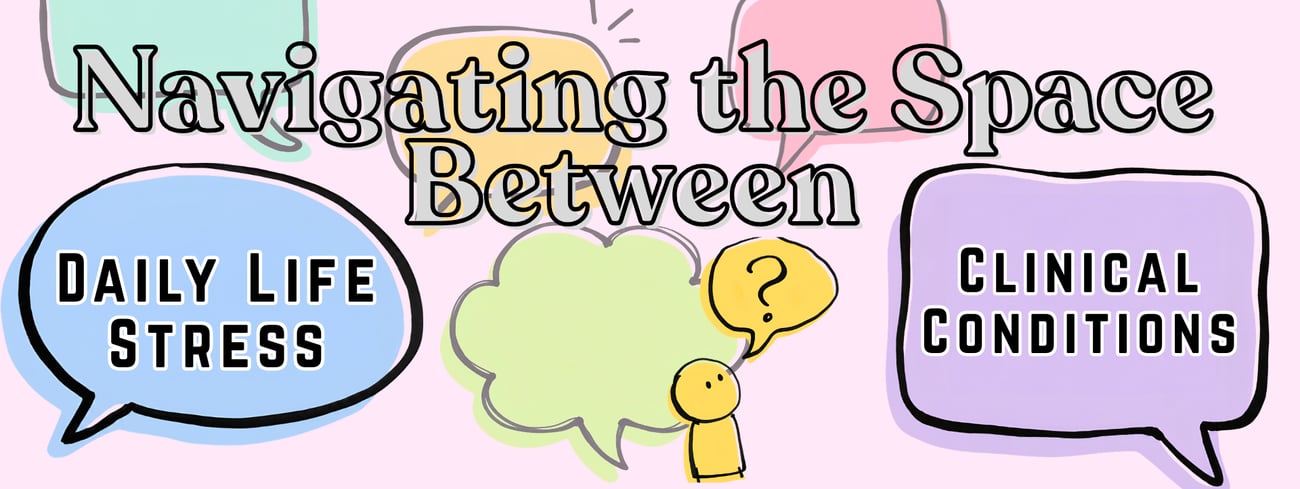
The conversation around mental health has expanded dramatically in recent years. Stigma is declining, and more people are seeking help. However, this progress brings a new challenge: distinguishing between the ordinary emotional struggles of being human and the early warning signs of a serious mental health condition.
Life naturally brings periods of stress, sadness, grief, and burnout. Feeling anxious before a major event or exhausted after a demanding month is a normal human response. When we describe every standard emotional wave using clinical terms, we risk confusing everyday challenges with health conditions that require professional intervention. |
|
"Feeling anxious, sad, or stressed now and then is part of everyday life; feeling persistent symptoms that get in the way of everyday life is not. The goal of mental health education is not to encourage self-diagnosis. It’s to help people better understand their experiences and recognize when everyday challenges may be evolving into something that deserves attention."
— Dr. Christine M. Crawford, NAMI’s Chief Medical Officer |
|
Mental health literacy isn't about pathologizing daily life, it is about clarity. Just as understanding physical health helps us know when a common cold needs rest versus when a fever requires a doctor, mental health education equips us to recognize when persistent symptoms warrant clinical support. |
|
|
 |
|
When people open up about their mental health journey, they often encounter well-meaning but oversimplified advice. Many who share their struggles are met with responses like, "Have you tried exercise?" or "Have you considered changing your diet?" While lifestyle factors, such as movement, nutrition, and community connection, are essential for supporting overall well-being, they are not simple substitutes for medical care when treating conditions like major depression, bipolar disorder, OCD, or PTSD.
|
|
"Lived experience is at the core of mental illness. A psychiatric disorder is a disruption of who you are and who you feel yourself to be in the world... Summing it up in some simple oversight in your diet or exercise regimens is most likely going to leave you feeling ignored, disregarded, and even quite hurt."
— Dr. Mark D. Rego, Psychiatrist
|
|
When someone shares their story, they are offering an invitation to listen and understand, not a request for unasked-for solutions. Recognizing the depth of lived experience helps us respond with genuine empathy rather than quick fixes.
|
|
|
 |
|
Talking about mental health is essential, but doing it correctly is what turns awareness into real change. Every interaction, post, and conversation is an opportunity to move our movement forward with accuracy, empathy, and respect.
Here is how you can take meaningful action in your community today: |
Practice Intentional, Accurate Language
-
Keep space for normal emotions: Use everyday terms for everyday feelings, like stress, disappointment, or sadness, rather than defaulting to clinical labels.
-
Gentle correction: Kindly correct stigmatizing terms (like "crazy" or "insane") or casually thrown-around clinical terms when you hear them in conversation or online.
-
Person-first approach: Focus on the individual rather than defining someone by a diagnosis (e.g., "a person living with schizophrenia" instead of "a schizophrenic").
|
| Words Matter: Using Inclusive Language |
|
|
Honor Lived Experience Through Active Listening
-
Resist the urge to prescribe: When someone opens up about their struggles, listen to understand rather than to fix. Skip the unsolicited wellness tips, diet advice, or workout suggestions.
-
Validate their story: A simple "Thank you for trusting me with this, I'm here for you" goes infinitely further than trying to minimize or solve their pain on the spot.
|
| A Guide to Sharing and Supporting |
|
|
Strengthen Community Mental Health Literacy
-
Educate yourself and others: Learn to recognize the actual early warning signs of serious conditions (such as persistent shifts in mood, severe sleep disruption, or withdrawal from daily life) so you know when to encourage professional support.
-
Bring NAMI to your network: Host a NAMI In Our Own Voice presentation or bring Ending the Silence to local schools, youth groups, or workplaces to foster real understanding.
|
| Understend the SIgns & Symptoms |
|
|
Get Hands-On in the Movement
-
Volunteer your time: Get trained to become a NAMI Support Group Facilitator or In Our Own Voice Speaker, attend support groups, or assist at our community outreach and fundraising events.
-
Participate in the NAMI Walk: Join us on Oct 10th for the NAMI CCNS NAMIWalk to help make mental health support visible, celebrated, and accessible to everyone. Register Today!
|
|
|
|
|
|
 |
|
Do you have go-to positive affirmation to get you through tough times? Share it with us for a chance to be featured in the Mental Health Wire! |
| Submit Your Affirmation |
|
|
 |
Our progress is driven by people like you!
Your support allows us to provide free educational programs, facilitate support groups, and advocate for accessible mental health care across our communities.
|
 Donate To NAMI CCNS |
|
|
|
Thank you for being an essential part of our community and for reading The Mental Health Wire. Every time you open a dialogue, correct stigmatizing language, or support a loved one, you strengthen a movement dedicated to hope, recovery, and understanding.
|
|
|
|
|
|
|
|
|
|
|
Copyright © 2026 NAMI CCNS, All rights reserved.
Our mailing address is:
NAMI CCNS
8324 Skokie Blvd
Skokie, Illinois 60077
United States
Our email address is:
admin@namiccns.org
Want to change how you receive these emails?
You can update your preferences or unsubscribe from this list. |
|
|
|
|


