 |
 |
|
Hello , |
|
Positive thinking isn’t about pretending everything is perfect, it’s about knowing that growth can happen even during tough times. True optimism doesn't ask you to ignore hardship; it asks you to reframe how you navigate it.
In this edition of the Mental Health Wire, we’re unpacking the neuroscience of self-talk, exploring how negative thinking traps work, and giving you actionable cognitive tools to reframe daily stress. By the end of this read, you’ll have a clearer understanding of your own mental habits and a practical framework to protect your mind and body.
|
|
|
 |
|
Optimism isn't just a mood, it’s a physical state that directly changes your neurochemistry and brain architecture. When you consciously practice positive self-talk and optimistic thinking, your brain undergoes key physiological shifts:
-
Neurotransmitter Release: Optimistic thoughts trigger the production of serotonin and dopamine. Serotonin creates a feeling of calm and emotional stability, while dopamine reinforces motivation and focus.
-
Prefrontal Cortex Activation: Positive emotions activate the prefrontal cortex, which is the brain’s "executive control center" responsible for creative problem-solving, decision-making, and high-level reasoning.
-
Cortisol Suppression: Reframing stressful events reduces activity in the amygdala (the brain's threat center), lowering the release of the stress hormone cortisol and protecting your body from long-term inflammation.
-
Cognitive Broadening: Chronic negative thinking causes "tunnel vision," restricting your perspective to immediate dangers. Optimism broadens your mental visual field, allowing you to see alternatives, opportunities, and solutions you would otherwise miss.
-
Neuroplasticity in Action: The brain operates on a "use it or lose it" principle. Repeatedly interrupting/correcting negative self-talk builds stronger neural pathways for optimism, making a positive mental attitude your default over time.
|
|
|
 |
|
Long-term research shows that an optimistic outlook isn't just good for your mood, but it also has measurable, evidence-based impacts on your physical health, brain function, and overall longevity:
-
Increased Longevity: A 30-year study revealed that people who were pessimistic had a nearly 20% higher risk of dying compared to those who were optimistic.
-
Fewer Physical Complaints: Research shows that people who keep track of their gratitude just once a week are consistently more upbeat and report fewer physical health symptoms than others.
-
Cardiovascular Protection: Optimism is linked to reduced risk of death from heart disease, stroke, and hypertension by promoting healthier heart rate variability and lower blood pressure.
-
Enhanced Immunity & Well-being: Maintaining a positive perspective increases resistance to illnesses, lowers rates of depression, and activates healthier coping mechanisms during severe stress.
-
Lifestyle Synergies: Optimistic individuals are statistically more likely to maintain healthy daily habits, like getting regular physical activity, eating a balanced diet, and avoiding smoking or excessive alcohol.
|
| Stop Negative Self-Talk to Reduce Stress |
|
|
 |
|
When stress hits, your brain often falls into automatic "thinking traps". Recognizing these habits is the first step to breaking them:
-
All-or-Nothing Thinking: Seeing things in extreme black-or-white terms. If something isn't 100% perfect, you view it as a complete failure.
-
Zooming In on the Bad: Focusing on one negative detail while completely ignoring all the compliments, progress, or good news.
-
Blaming Yourself First: Automatically assuming that when something goes wrong, it must be your fault.
-
Expecting the Worst: Jumping straight to worst-case scenarios in your head without any real proof.
-
The "Should" Trap: Guilting yourself with lists of things you think you "should" or "must" be doing.
|
| When Your Mind Tells You... |
Why the Shift Matters |
| "I've never done this before, I'm going to fail." |
"It's an opportunity to learn something new." |
| "This is way too complicated." |
"I'll tackle it from a different angle." |
| "I'm too lazy to get this done." |
"I couldn't fit it in today, but I can re-examine my priorities." |
| "There's no way this will work out." |
"I can try to make it work and see what happens." |
|
|
|
|
|
|
 |
|
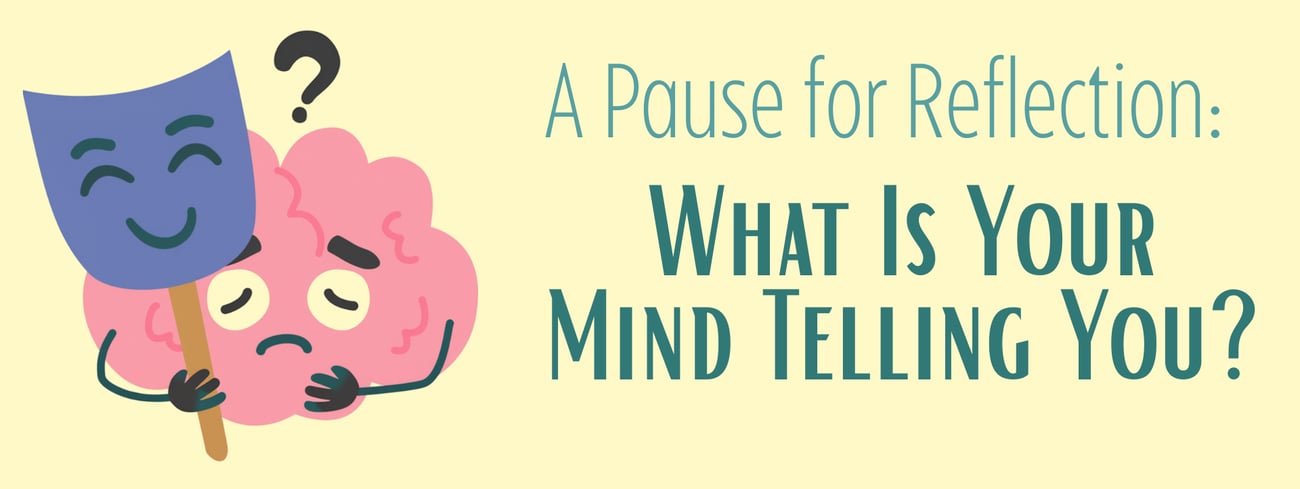
Take a moment to step back and evaluate your current thought patterns. Consider these three questions:
-
The Friend Test: What is one negative phrase you frequently repeat to yourself under stress? Would you ever say that phrase out loud to a loved one going through a hard time?
-
The Silver Lining Check: When faced with a recent setback, did you focus solely on what went wrong, or did you identify one skill you developed or lesson you learned?
-
Acknowledging Growth: What is one small step forward you took this week that you forgot to give yourself credit for?
|
|
|
 |
|
Do you have go-to positive affirmation to get you through tough times? Share it with us for a chance to be featured in the Mental Health Wire! |
| Submit Your Affirmation |
|
|
 |
Support Free Local Mental Health Care
Every individual deserves access to compassionate, evidence-based mental health support. Your donations make free community education, peer-led support groups, and vital advocacy programs accessible to individuals and families in our community.
|
 Donate To NAMI CCNS |
|
|
|
Thank you for taking a few minutes out of your day to prioritize your mental well-being. Shifting an ingrained mindset is a daily habit built through small, intentional choices. As you go through your week, pay close attention to your internal dialogue. Be gentle with your progress, reframe negative thoughts without judgment, and keep giving yourself credit for every step forward!
|
|
|
|
|
|
|
|
|
|
|
Copyright © 2026 NAMI CCNS, All rights reserved.
Our mailing address is:
NAMI CCNS
8324 Skokie Blvd
Skokie, Illinois 60077
United States
Our email address is:
admin@namiccns.org
Want to change how you receive these emails?
You can update your preferences or unsubscribe from this list. |
|
|
|
|


