|
|
|
|
|
|
Sharing your mental health journey, or reaching out to a friend who is struggling, can feel like navigating a new trail without a map. Whether you are the one looking for support or the one offering it,
communication is the bridge to healing.
In this edition of the Mental Health Wire, we’ve gathered practical tips and "scripts" to help you find the right words, maintain your boundaries, and support your peers with empathy and respect.
|
|
|
|
|
There is no “right” way to share what you’re going through. Some of us are open and honest with close friends, while others prefer to stay private. Every relationship is different, and the choice of what
to share is always yours.
|
|
|
Determining Your "Why"
Before opening up, it is helpful to consider what you want to accomplish. Having a goal helps you decide how much detail to provide:
To gain empathy: "I’ve been feeling really overwhelmed lately, and I just needed someone to know."
To ask for specific help: "I’m struggling with my energy levels right now. Would you mind checking in on me once a week?"
To explain your actions: If your anxiety makes a crowded party feel impossible, sharing that reason can prevent friends from feeling like you are avoiding them. Just like a food allergy, some environments simply don't make sense for your health right now.
|
|
|
Practical Strategies for Sharing
The "Trial Run": Practicing in front of a mirror or writing your thoughts down first can reduce the "weight" of the conversation.
Maintain Your Privacy: You don’t have to share a specific diagnosis, medication, or treatment plan to get support. It is perfectly okay to say: "I’m dealing with a mental health challenge right now. I’m learning how to manage it, and I’d appreciate your patience if I’m a little quiet lately."
Manage Your Expectations: While sharing can bring you closer to people, remember that you cannot control their reaction. Focus on the relief of being honest rather than trying to "mind-read" their response.
|
|
|
|
|
If you are worried about a friend, the most important thing you can do is start a chat. You don’t need to be an expert; you just need to be a supportive presence.
|
How to Start and What to Say
The Calm Approach: Choose a private place where you won't be interrupted. Use a caring voice, but don't overdo it, just be yourself.
Be Specific and Non-Judgmental: Instead of vague questions, use "I" statements to describe what you've actually seen.
"I've noticed you've been skipping practice lately, and I'm worried about you."
"I'm bringing this up because I care about you as a friend, not to embarrass you."
Reassure and Encourage: If they aren't ready to talk, don't push. Offer a "landing pad" for the future:
|
|
|
What to Listen and Look For
Listening is more than just hearing words; it’s about observing the clues that tell you what’s really going on. Pay attention to:
Their words: Are they expressing hopelessness or frustration?
Their tone of voice: Someone might say they are "fine," but their voice sounds sad, flat, or angry.
Their body language: Notice if they are hunched over, curled up, or avoiding eye contact when they would normally be confident and friendly. Big changes in how they talk, walk, or act can be a signal they need help.
|
|
|
The Art of Being a Good Listener
Good listening involves your whole body and your full attention. Here is how to show you are truly there for them:
Use Open Body Language: Avoid crossing your arms, which can seem like you aren't ready to listen. Instead of sitting directly across from them, try sitting side-by-side or talking while walking.
Match Their Eye Contact: If they are looking away, don't force it. If they look to you, offer a reassuring gaze back.
Eliminate Distractions: Put your phone on silent and keep it out of sight.
Recap and Reflect: Once they are done talking, repeat back what you heard to ensure you understand. Try saying, "So what I think you are saying is..." This allows them to fix any misunderstandings and feel truly supported.
|
|
|
How to Support Someone Else
Keep Your Cool: Stay calm even if they react with anger or dismissiveness. Remember, if they get negative, it’s likely a reflection of the difficult things they are coping with, not a reflection of your friendship.
Avoid the "Comparison Trap": This moment is about your friend, not you. Resist the urge to say "I know exactly how you feel" or to tell a long story about your own life.
Avoid Simplistic Phrases: Never use "Cheer up" or "Just get over it." These minimize the courage it takes to struggle with a mental health challenge.
|
|
|
|
|
|
|
|
|
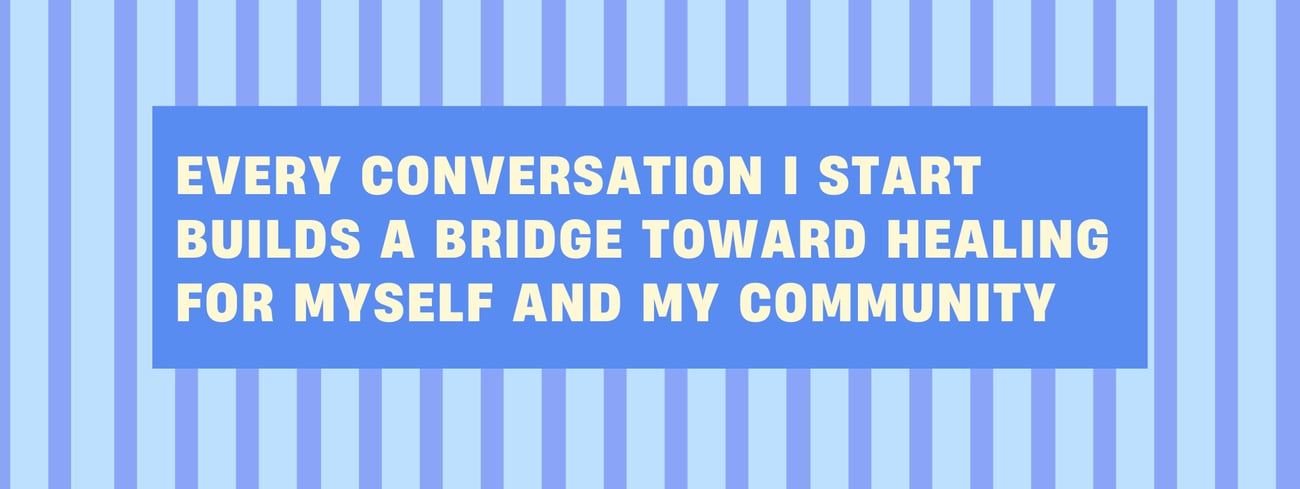 |
Do you have go-to positive affirmation to get you through tough times? Share it with us for a chance to be featured in the Mental Health Wire!
|
| Submit Your Affirmation
|
|
|
|
|
The most powerful thing we can offer one another is the space to be seen and heard without judgment.
Whether you are navigating your own recovery or standing by a friend, remember that every honest conversation is a step toward a world where no one has to struggle alone.
|
|
|
At NAMI Cook County North Suburban, we are here to support those conversations, whether through our free education classes, our peer-led support groups, or simply by providing the resources you need to reach
out. Thank you for having the courage to speak up and the heart to listen. We are honored to walk this path with you.
|
|
|
|
|