|
 |
|
Hello , |
|
|
|
June marks Men’s Health Month, a time for us to turn our collective attention to an issue that is too often left in the shadows: men's mental well-being.
Here at NAMI CCNS, we know that mental health is health. Yet, deep-seated societal expectations and outdated stigmas continue to create a silent crisis for the men, boys, and families in our communities. This month, we are dedicated to breaking that silence, challenging the stigma, and opening doors to life-saving conversations. |
|
|
 |
|
The expectation to be "strong and quiet" frequently discourages men from reaching out. However, recent data from SAMHSA and the CDC paints a sobering picture of what U.S. men (age 18 and older) are facing: |
|
|
| Access More Men's Health Statistics |
|
These numbers serve as a powerful reminder: no one struggling with mental health is alone. Experiencing a mental health condition is not a personal failure; it involves real chemical and biological changes. Just as you wouldn't expect someone to clear up diabetes through sheer willpower, we cannot expect men to simply "tough out" mental illness. |
|
|
|
|
|
 |
|
Men often express emotional distress differently than women. Rather than openly expressing sadness, men are more likely to display physical symptoms or behavioral changes.
Keep an eye out for these subtle and overt shifts in yourself or the men in your life:
-
Behavioral Changes: Increased irritability, sudden anger, aggression, risky behaviors (excessive gambling, reckless driving), or social withdrawal from friends and family.
-
Physical Symptoms: Persistent fatigue, unexplained physical aches/pains, and significant changes in appetite or sleep patterns.
-
Substance Misuse: Using alcohol or drugs as a way to self-medicate or numb emotional pain.
-
Functional Decline: Drop in concentration, trouble making decisions, neglecting daily responsibilities, or a loss of interest in lifelong hobbies.
-
Negative Outlook: Talking hopelessly, expressing worthlessness, or suddenly bringing up themes of separation or isolation.
|
| Explore More Warning Signs & Symptoms |
|
|
 |
|
The expectation to be "strong and quiet" frequently discourages men from reaching out. This expectation stems from deeply ingrained societal ideas of traditional masculinity. From a young age, many boys are explicitly or implicitly taught that emotional vulnerability is a form of weakness. They receive messages to "man up," "tough it out," or handle their problems on their own.
This conditioning creates several distinct barriers when a man experiences a mental health crisis:
-
Emotional Isolation: When expressing sadness, anxiety, or fear is viewed as unmasculine, men learn to internalize and suppress these feelings. This emotional concealment makes it incredibly difficult to admit to loved ones, or even to themselves, that they are struggling.
-
The Mask of Anger: Because society often deems anger or irritability as more acceptable male emotions than sadness or fear, underlying depression or trauma frequently masks itself as aggression, frustration, or risky behavior. This makes the root mental health issue much harder for family members or clinicians to recognize.
-
Delaying Help as a Point of Pride: Seeking therapy or medical care can feel like an admission of defeat or a loss of self-reliance. As a result, many men wait until a crisis becomes entirely unmanageable before reaching out, missing the opportunity for early, highly effective intervention.
|
| Men's Emotional Intelligence Guide |
|
|
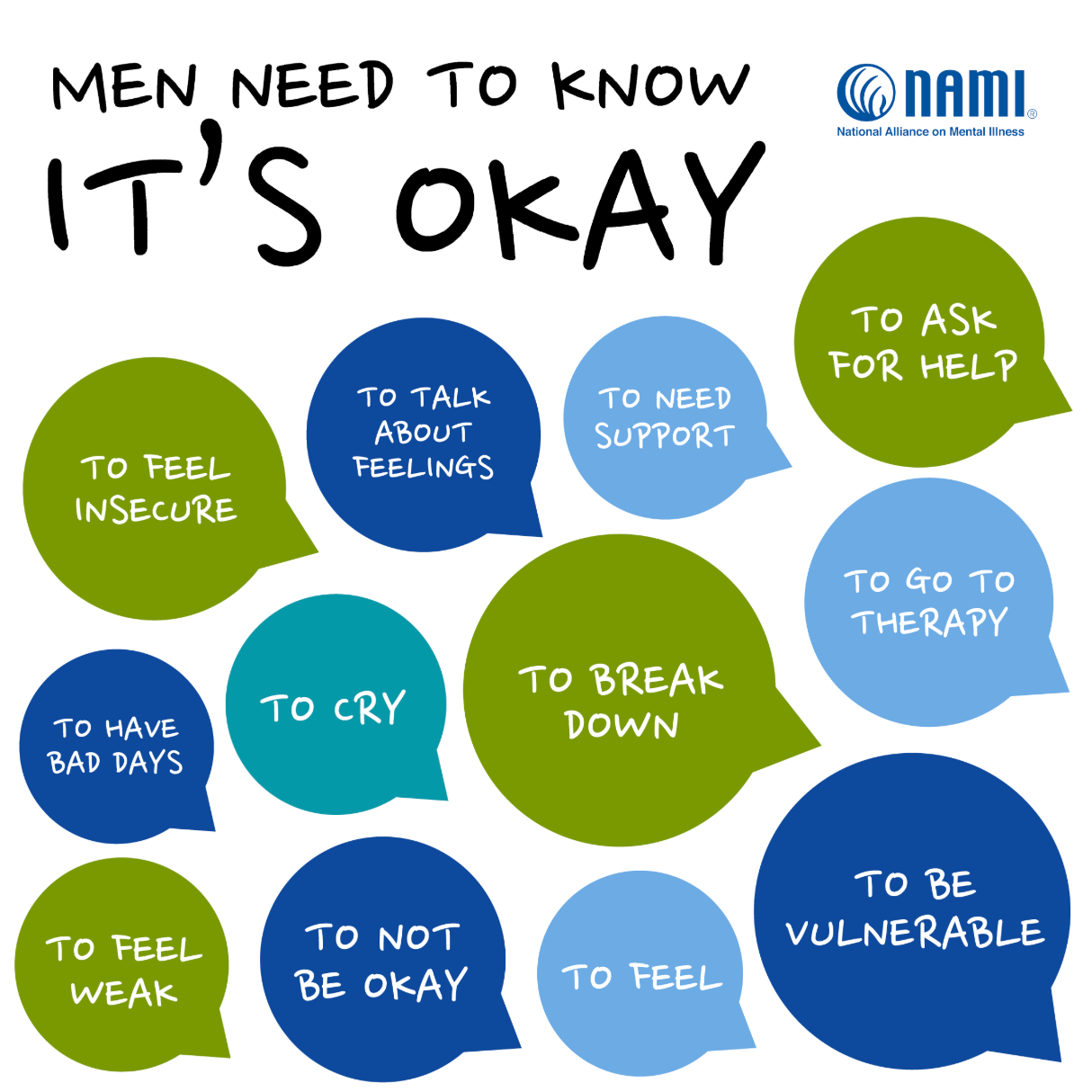
Redefining Strength
To dismantle this, we have to redefine what it means to be strong. True strength isn't about carrying an impossible burden alone until it breaks you; it is having the courage to recognize when you need a team, speak up, and take charge of your health. |
|
|
|
|
 |
|
Small, intentional steps can spark a massive cultural shift. We must build environments where men feel safe speaking up without judgment.
1. Start a Conversation
Check in on the men in your life, whether it’s a father, brother, partner, friend, or colleague. Don't just settle for "I'm fine." Ask, "How are you, really?" and listen without rushing to "fix" the problem.
2. Create Safe Spaces
Foster environments, at home, the workplace, the gym, the barbershop, or in the community, where emotional vulnerability is respected. Normalize the fact that seeking help is a sign of strength and courage, not weakness.
3. Share Resources & Normalize Therapy
Help bridge the gap between struggling and getting care. If someone you love is having a hard time, gently guide them toward professional support or free, anonymous self-check tools. |
-
988 Suicide & Crisis Lifeline: Call or text 988 anytime for immediate, confidential support.
-
SAMHSA National Helpline: Call 1-800-662-HELP (4357) for free, 24/7 treatment referral and information services.
-
HeadsUpGuys: A dedicated resource featuring practical tips, success stories, and a free online depression self-check tool specifically tailored for men.
-
Man Therapy: Uses a blend of humor and straight talk to engage men in taking charge of their mental well-being.
|
|
|
|
|
Take the Next Step
Prioritizing your mind is a powerful act of self-care. Don't navigate this journey in isolation. Whether you are looking into therapy for the first time or simply need someone to talk to, the resources and community are ready to back you up. Let's break the silence together. |
|
|
|
| More Men's Mental Health Resources |
|
|
 |
|
Do you have go-to positive affirmation to get you through tough times? Share it with us for a chance to be featured in the Mental Health Wire! |
| Submit Your Affirmation |
|
|
 |
Donate to NAMI CCNS Today
We cannot break the silence around men’s mental health alone. Your generosity ensures that a brother, father, son, or friend always has a safe, stigma-free place to turn when they need it most.
Thank you for being an essential part of our community and for standing with us to fight stigma. True change starts with one conversation, and by staying informed, compassionate, and vocal, you are actively helping to save lives.
|
| Donate Now |
|
|
|
|
|
|
|
|
|
|
Copyright © 2026 NAMI CCNS, All rights reserved.
Our mailing address is:
NAMI CCNS
8324 Skokie Blvd
Skokie, Illinois 60077
United States
Our email address is:
admin@namiccns.org
Want to change how you receive these emails?
You can update your preferences or unsubscribe from this list. |
|
|
|
|