 |
 |
|
Hello , |
|
Welcome to the second week of Mental Health Awareness Month. While last week focused on the broad foundation of mental health, this week we are turning our attention to those who often rely on us to speak up for them: our children, adolecents and young adults. |
|
|
|
|
 |
|
Parents, caregivers, and educators are usually the first to notice when something feels "off." Because young people are constantly growing and changing, it can sometimes be difficult to distinguish between typical developmental milestones and signs that a child may be struggling with their mental health.
The Golden Rule: Trust your gut. If you notice persistent changes in your child's mood, sleep, appetite, or social behavior, it may be time to reach out.
Mental health challenges in youth can manifest differently than they do in adults. Keep an eye out for these common indicators:
-
Emotional Changes: Unexplained irritability, intense worries or fears, or a sudden loss of interest in activities they used to love.
-
Behavioral Shifts: Withdrawal from friends, family, or school activities. You might also notice a drop in academic performance.
-
Physical Symptoms: Persistent headaches or stomachaches that don't have a clear physical cause, or significant changes in sleeping and eating habits.
-
Risk Factors: Keep in mind that chronic stress, family history, or experiencing trauma can increase a young person's vulnerability to mental health conditions.
|
|
|
|
 |
|
To effectively support a young person, we must move beyond just "checking in" and focus on creating a sustainable environment of safety and trust. Here is an expanded guide on how to be a meaningful ally in their mental health journey. |
1. The Power of "Active Listening"
Listening is more than just staying quiet while they speak. It involves being fully present and showing that you hear the emotion behind their words.
-
Reflective Listening: Instead of jumping to solutions, try reflecting their feelings back to them. Say, "It sounds like you're feeling really overwhelmed by school right now, is that right?"
-
Body Language: Put away distractions (like phones), maintain eye contact, and sit at their level to minimize any power imbalance.
-
Avoid the "Fix-It" Trap: Resist the urge to offer immediate advice. Often, a young person just needs to feel understood before they are ready to problem-solve.
2. Create "Low-Pressure" Opportunities for Connection
Teens and children often feel intimidated by "the big talk" across a dinner table.
-
Side-by-Side Conversations: Many young people find it easier to open up when they aren’t making direct eye contact. Try talking while driving in the car, walking the dog, or working on a craft/project together.
-
Consistency over Intensity: You don’t need a deep, hour-long session every day. Short, frequent "micro-check-ins" (like "what was the high and low of your day?") build a foundation of trust so they know you are available when things get heavy.
3. Validate and Normalize Their Experience
Stigma thrives on the idea that mental health struggles are "weird" or "wrong."
-
Validate, Don't Minimize: Avoid phrases like "You’re just a kid, you don't have real stress yet." To a young person, their stress is very real. Instead, say, "I can see why that would be really hard for you."
-
Normalize Help-Seeking: Treat mental health care with the same casual importance as physical health care. Mention how seeing a therapist is like seeing a coach or a doctor and how it’s simply a tool to help them perform their best.
4. Practice "Whole-Person" Support
Focus on the environment surrounding the young person, not just the "symptoms."
-
Stable Routines: Predictable schedules for meals and sleep provide a sense of security when internal emotions feel chaotic.
-
Connection is Protection: Encourage participation in hobbies, sports, or community groups. Meaningful social connection is one of the strongest protective factors against mental health decline.
|
|
|
|
|
|
 |
|
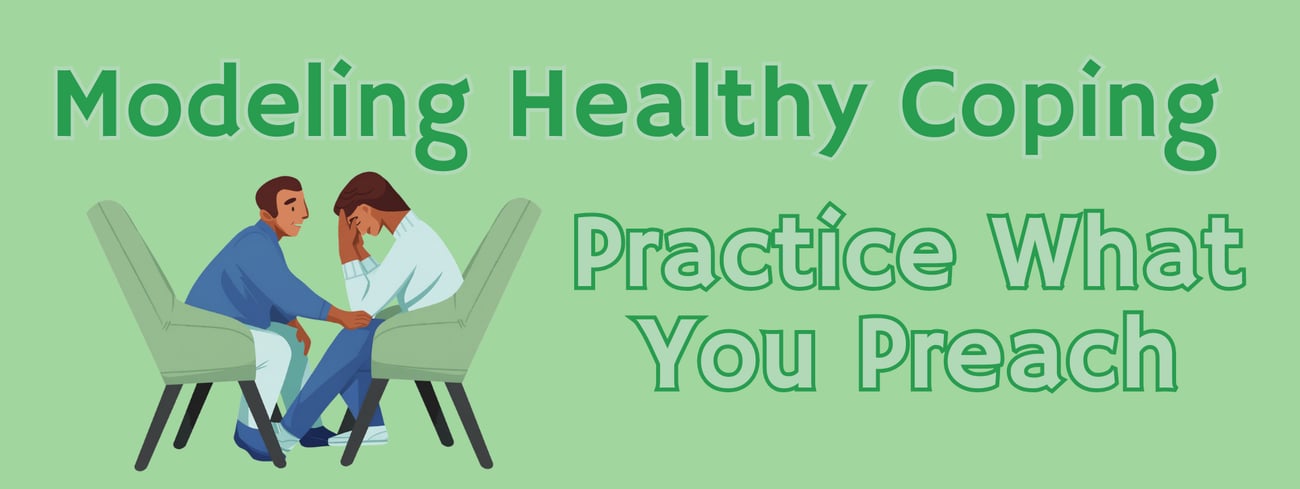
Your children and the youth in your life look to you as a blueprint for resilience. When you are feeling the weight of the day, try "narrating" your coping strategy out loud. This turns a moment of stress into a teaching moment.
Practical Examples You Can Use:
Setting Boundaries with Technology:
"I’ve noticed I’m feeling a bit anxious after scrolling through my phone. I’m going to put it in the other room for an hour so I can focus on being present with you and feel more calm."
Prioritizing Physical Wellness:
"I’m feeling pretty drained after that long meeting. Instead of reaching for more caffeine, I’m going to go to a yoga class tonight to help my body relax and reset."
Navigating Frustration or Mistakes:
"I’m feeling really frustrated because I made a mistake on that project. I’m going to take a few deep breaths and step away for a minute so I don't respond while I'm angry. I'll try again when I'm calm."
Normalizing "Rest as Productive":
"My brain feels a bit fuzzy because I’ve been working so hard. I’m going to spend 20 minutes journaling/reading for fun because I know my mind needs a break to stay healthy."
The Power of Nature:
"It’s been a heavy week. I think I need some fresh air and sunshine to help me feel grounded, so let’s take the dog for a walk around the park together."
Asking for Help:
"I’m feeling a bit overwhelmed with all the chores today. Instead of trying to do it all and getting stressed, I’m going to ask for some help so we can get it done faster and all have a relaxing evening."
Why This Works:
When you speak these thoughts out loud, you are doing three things:
-
Labeling the Emotion: You show them it’s okay to name feelings like "anxious," "frustrated," or "overwhelmed."
-
Choosing an Action: You demonstrate that we have a choice in how we respond to those feelings.
-
Removing the Shame: You show that even adults struggle, but that there are healthy tools we can use to feel better.
By modeling these behaviors, you create a household culture where prioritizing mental health is just as normal as brushing your teeth. |
|
|
|
|
|
 |
|
Do you have go-to positive affirmation to get you through tough times? Share it with us for a chance to be featured in the Mental Health Wire! |
| Submit Your Affirmation |
|
|
 |
|
Mental health advocacy is a continuous effort to show up for one another. At NAMI CCNS, we provide our support groups and youth programs at no cost, but we can't do it without you!
If you found this week’s or any other issue of the Mental Health Wire's information helpful, please consider making a donation. Your gift stays local, ensuring that when a family in our community reaches out, we are there to answer.
|
| Donate Now |
|
Thank you for being a vital part of our community. Keep coming back all month long! Next week, we’ll explore how Words Matter and Words Can Heal.
|
|
With gratitude,
The NAMI CCNS Team
|
|
|
|
|
|
|
|
|
|
Copyright © 2025 NAMI CCNS, All rights reserved.
Our mailing address is:
NAMI CCNS
8324 Skokie Blvd
Skokie, Illinois 60077
United States
Our email address is:
admin@namiccns.org
Want to change how you receive these emails?
You can update your preferences or unsubscribe from this list. |
|
|
|
|


